The Problem
AI product engineering tidak berhenti di prompt.
Bagian tersulit dari AI app ada di area sekitar LLM: data flow, UI state, auth, validation, streaming, tool execution boundary, logging, deployment, dan cost control.
Build the product system around LLMs: UI, backend, data, AI harness, streaming, tools, observability, and deployment in TypeScript.
Pendaftaran Batch II telah ditutup karena kuota sudah penuh.
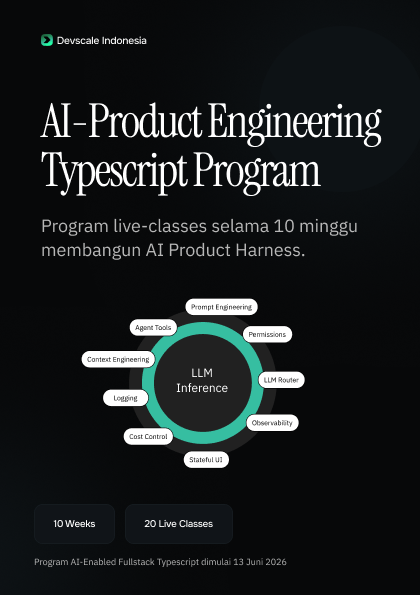
Program Flyer
Download PDF ringkasan program ini untuk melihat arah pembelajaran, jalur product engineering, perjalanan kurikulum, profil mentor, harga, dan detail pendaftaran.
Download PDFThe Problem
Bagian tersulit dari AI app ada di area sekitar LLM: data flow, UI state, auth, validation, streaming, tool execution boundary, logging, deployment, dan cost control.
The Strategy
AI Engineering punya dua jalur besar. Model engineering fokus pada dataset, training, dan eval model. Program ini fokus pada product engineering: membuat LLM menjadi fitur produk yang bisa dipakai, dijaga, dan dikembangkan.
The System
Student tidak langsung lompat ke inference. Mereka membangun fondasi produk lebih dulu, lalu menambahkan AI layer dengan kontrak, state, permission, observability, dan feedback loop.
Product System
Reactive UI, streaming states, generative interfaces, and user-facing flows.
Hono APIs, Zod contracts, durable objects, permissions, and workflow boundaries.
PostgreSQL, vector embeddings, user-owned data, and application context.
AI SDK, tools, observability, evals, cost control, and deployment infrastructure.
Curriculum
Week 1
Week 2
Week 3
Week 4
Week 5
Week 6
Week 7
Week 8
Week 9
Week 10
The order of the curriculum may change, but everything listed in the curriculum will be learned.
Outcomes
Typed Fullstack Skill
Build frontend, backend, API contracts, and database access in one coherent TypeScript workflow.
AI Product Engineering
Build product surfaces around LLMs with streaming UI, structured output, tool calling, and workflow boundaries.
Production Judgment
Understand auth, permissions, deployment, observability, cost control, and failure states for AI features.
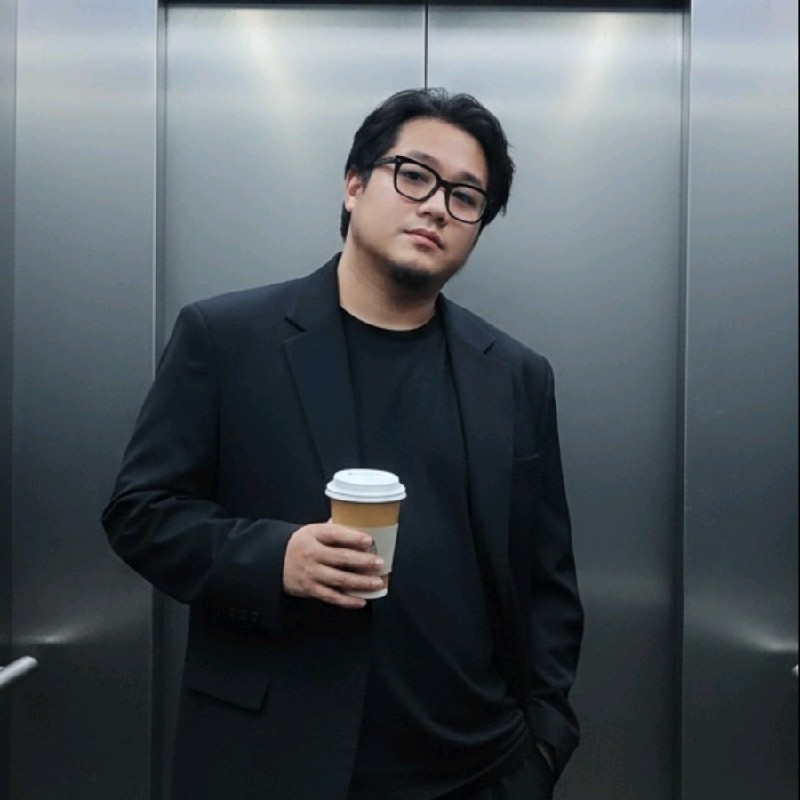
Mentor
Interdisciplinary Software & AI Engineer
Scholarship Batch II
Empat penerima scholarship untuk Batch II telah terpilih. Lihat daftar lengkapnya di halaman scholarship.
Lihat penerima scholarshipPendaftaran Ditutup
Kuota Penuh
Terima kasih atas antusiasmenya. Seluruh seat AI Product Engineering with TypeScript Batch II telah terisi.
Dimulai
Starting Wednesday, 26 August 2026
Jadwal
Wednesday and Thursday 20:00 WIB
20 Live Class Sessions
2x 1-on-1 Mentoring
Auto Assignment Reviews
Lifetime Recording Access
Bonus Platform Course
Completion Certificate
Informasi Pendaftaran
Kuota AI Product Engineering with TypeScript Batch II sudah penuh. Form pendaftaran dan pendaftaran melalui WhatsApp tidak lagi tersedia.
Program Structure
Schedule
Wednesday and Thursday 20:00 WIB
Starting Wednesday, 26 August 2026
Duration
10 Weeks
2 live sessions per week
Prerequisites
Basic HTML, CSS, and JavaScript
TypeScript will be taught from the foundation
Format
100% Online Live Interactive Classes
Live class, assignment, review, and mentoring
Final Output
AI product engineering project
A deployable fullstack product for portfolio and review
Stack
React, Hono, PostgreSQL, TypeScript
With AI SDK, Zod, Prisma, and deployment workflow
Student Support
Learn alongside Devscale students and alumni in a focused engineering community.
Submit work, receive feedback, and improve through practical iteration instead of passive watching.
Use 1-on-1 sessions to discuss technical blockers, project direction, and career context.
Devscale Direction
TypeScript lets students share types, schemas, and product assumptions across frontend, backend, data, and AI harness code.
The curriculum focuses on the hard parts around the model: UI state, streaming, tools, data access, auth, and deployment.
Students work with React, Hono, PostgreSQL, Prisma, Zod, TanStack Query, and AI SDK patterns used in current product teams.
Live classes, assignments, and 1-on-1 sessions give students direct feedback on architecture, code quality, and product decisions.
Related Reading
Career direction
Kenapa program ini fokus ke LLM product harness, bukan model training dari nol.
Program direction
Alasan Devscale mengalihkan fokus program publik dari Python ke full-stack TypeScript.
FAQ
Untuk program publik Devscale, iya. AI-Enabled Python kami sunset agar fokus kurikulum berikutnya lebih tajam ke AI Product Engineering dengan TypeScript. Python tetap bagus dan tetap relevan, terutama untuk data, automation, machine learning, dan eksperimen model. Namun untuk membangun produk web modern dengan UI, backend, database, auth, streaming, dan AI feature dalam satu workflow, kami memilih TypeScript sebagai fokus utama.
Tidak harus. Kamu perlu nyaman dengan dasar HTML, CSS, dan JavaScript terlebih dahulu. TypeScript akan dipelajari dari fondasi, mulai dari type dasar, interface, narrowing, generics, sampai cara memakai type untuk menjaga API contract, schema, dan data flow di aplikasi fullstack.
Cocok untuk beginner yang sudah punya dasar web development. Program ini bukan mulai dari nol absolut, jadi kamu sebaiknya sudah memahami struktur HTML, styling CSS, JavaScript dasar, function, array, object, dan async dasar. Jika belum, kamu tetap bisa mendaftar, tapi kami sarankan menyelesaikan materi dasar web terlebih dahulu sebelum batch dimulai.
Program ini biasanya tersedia dengan opsi pembayaran 2x. Informasi lebih lanjut akan diumumkan saat pendaftaran batch berikutnya dibuka.
Tidak. Fokus program ini bukan melatih model dari nol. Fokusnya adalah membangun produk yang mengintegrasikan AI secara utuh: memakai LLM API, AI SDK, structured output, streaming UI, tool calling, workflow automation, retrieval, evaluation sederhana, dan production safety. Jadi arahnya adalah AI Product Engineering, bukan machine learning research.
Final project berupa aplikasi fullstack TypeScript yang punya fitur AI nyata. Student akan membangun product surface untuk single-turn AI interaction, multi-turn agent experience, agentic workflow dengan tool calling, RAG atau retrieval layer, serta observability untuk melihat trace, logs, error, dan kualitas output. Yang dinilai bukan hanya AI-nya, tapi juga arsitektur aplikasi, database design, UX, auth, deployment, error handling, dan keputusan teknisnya.